✨ New Arrivals Just Dropped!Explore

$2.67
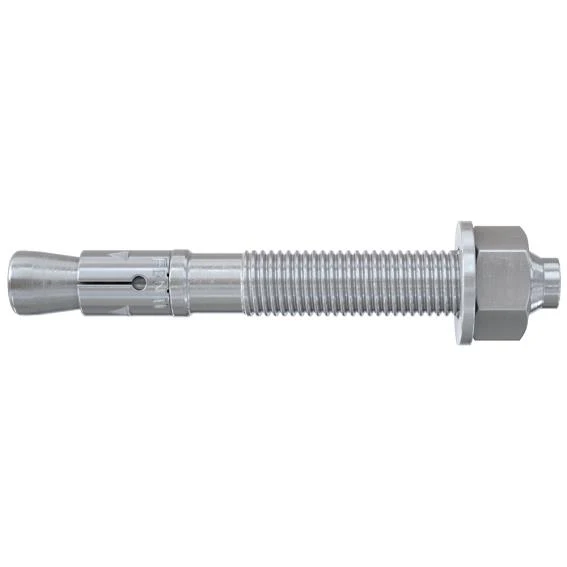
Steel anchor, M12, d12, L124—
$2.67
The Story
The fischer bolt anchor FBN II is a steel anchor for cost-effective fixings in non-cracked concrete.
Due to the long thread and the two anchorage depths, the fischer bolt anchor FBN II can be used in a particularly flexible manner.
The bolt anchor is also suitable for stand-off installation as well as pre-positioned and in push-through installation.
The bolt anchor is made of hot-dipped steel and is suitable for railings, handrails or consoles.
Functionality
The FBN II is suitable for pre-positioned and push-through installation; also suitable for stand-off installation under certain conditions.
Prior to installation, place the hexagon nut in the optimal position (the drive-in pin projects by approx. 3 mm out of the hexagon nut).
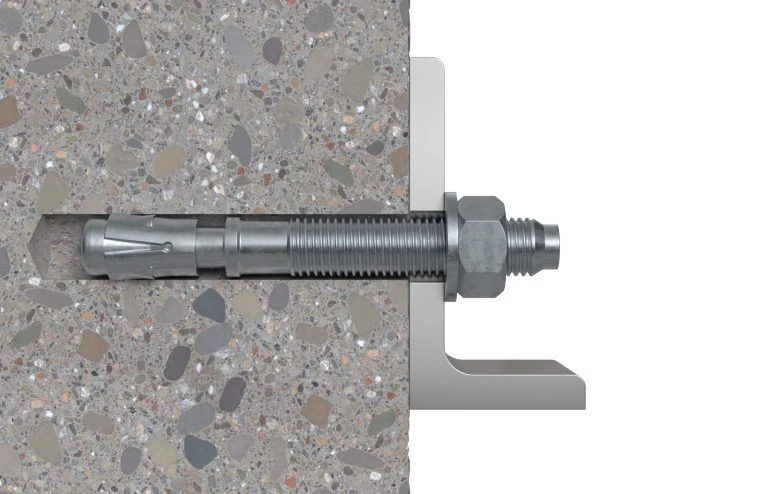
When applying the torque, the cone bolt is pulled into the expansion clip and expands it against the drill hole wall.
The head embossing offers a simple control of the anchoring.
Due to the long thread and the two anchorage depths, the fischer bolt anchor FBN II can be used in a particularly flexible manner.
The bolt anchor is also suitable for stand-off installation as well as pre-positioned and in push-through installation.
The bolt anchor is made of hot-dipped steel and is suitable for railings, handrails or consoles.
Functionality
The FBN II is suitable for pre-positioned and push-through installation; also suitable for stand-off installation under certain conditions.
Prior to installation, place the hexagon nut in the optimal position (the drive-in pin projects by approx. 3 mm out of the hexagon nut).
When applying the torque, the cone bolt is pulled into the expansion clip and expands it against the drill hole wall.
The head embossing offers a simple control of the anchoring.
Details & Craftsmanship
Every detail has been carefully considered to bring you the perfect product.
Details & Craftsmanship
Every detail has been carefully considered to bring you the perfect product.
Description
The fischer bolt anchor FBN II is a steel anchor for cost-effective fixings in non-cracked concrete.
Due to the long thread and the two anchorage depths, the fischer bolt anchor FBN II can be used in a particularly flexible manner.
The bolt anchor is also suitable for stand-off installation as well as pre-positioned and in push-through installation.
The bolt anchor is made of hot-dipped steel and is suitable for railings, handrails or consoles.
Functionality
The FBN II is suitable for pre-positioned and push-through installation; also suitable for stand-off installation under certain conditions.
Prior to installation, place the hexagon nut in the optimal position (the drive-in pin projects by approx. 3 mm out of the hexagon nut).
When applying the torque, the cone bolt is pulled into the expansion clip and expands it against the drill hole wall.
The head embossing offers a simple control of the anchoring.
Due to the long thread and the two anchorage depths, the fischer bolt anchor FBN II can be used in a particularly flexible manner.
The bolt anchor is also suitable for stand-off installation as well as pre-positioned and in push-through installation.
The bolt anchor is made of hot-dipped steel and is suitable for railings, handrails or consoles.
Functionality
The FBN II is suitable for pre-positioned and push-through installation; also suitable for stand-off installation under certain conditions.
Prior to installation, place the hexagon nut in the optimal position (the drive-in pin projects by approx. 3 mm out of the hexagon nut).
When applying the torque, the cone bolt is pulled into the expansion clip and expands it against the drill hole wall.
The head embossing offers a simple control of the anchoring.